

How to Start Homeschooling: 5 Things to Consider
Are you thinking about homeschooling but aren’t sure where to start? Do you need help navigating the enormous amount of information available online? Are you wondering what to do first?
Homeschooling is a great option for many families but trying to find the right information, tools, and curricula can be a little overwhelming. Keep reading to find out what 5 things I recommend when you are considering homeschooling your children.
My family started homeschooling when we realized we couldn’t afford a private school tuition. We had never planned on homeschooling, and, in fact, had never heard of homeschooling until our oldest child was ready to start school. Looking back now after homeschooling four children from preschool through high school graduation, it’s hard to believe how little I knew when we started. Even so, we knew we wanted our children’s education to include learning about God and the bible. When private school was no longer an option, we really did not know what to do until a friend mentioned homeschooling.
This friend answered all my questions and gave me several copies of The Old Schoolhouse Homeschool Magazine. It had lots of info and lots of advertisements for homeschool curricula. I was a little nervous since homeschooling was so new to me, but I was also a little excited that I would get to teach my son how to read, and count, and all the other things. If you want to read more about the start of our homeschool journey you can click HERE.
I had 3 more children that eventually started school at home as well. In the end, I homeschooled for over 22 years and took 4 children from preschool through high school graduation. I had no teaching background, and no college education at that point. I had never heard of homeschooling until the day my friend mentioned it to me. I did not know about homeschool curriculum or about anything in the homeschool world, yet I got started and just kept going. You can do it too!
Afraid to Start Homeschooling?
You may be a little overwhelmed right now, thinking about homeschooling, and that is perfectly normal. Stepping out and doing anything out of the ordinary can feel that way. If you’re spending hours online trying to figure out where to begin, take a deep breath. You do not need to learn everything about homeschooling before you start. Most homeschool parents learn as they go, and that’s exactly what I did.
That’s why I wanted to take a few minutes and offer you some information in small chunks that will take some of that overwhelm away and help you make some first steps towards homeschooling.
Learn Your State Laws
Common Mistakes New Homeschoolers Make
Many parents who start homeschooling or want to start homeschooling may assume that the laws are the same in every state. They may also assume that since homeschooling is legal in the United Stated that they are free to homeschool however they please. Unfortunately, this is not the case. While several states may have similar regulations, there are many with differing requirements for homeschoolers.
Another mistake I see is parents relying on advice from others on social media. Social media can be a great place for finding other homeschoolers and getting curriculum advice, but when it comes to the laws or regulations in your state, make sure you are getting correct information. I mention a great website below for finding the right information for your state.
The third thing I want to mention that is very important is keeping the required records or documentation. Again, each state is different, so do your research and make sure you meet the requirements for your state.
I homeschooled in 3 different states, and I recommend keeping records whether or not your state specifically requires them. This is just a safe practice in case anything ever comes up or you are accused of anything, you have some evidence that your children are getting a proper education.
If it turns out that you never need them, then you have a nice little keepsake for your children of their homeschooling years.
Learn all about the homeschool regulations in your state.
While homeschooling is legal in all 50 states, each state regulates it differently. Some states require homeschoolers to do certain things like submit a list of curricula you will be using with your child, or show attendance records, etc. Other states require absolutely nothing from homeschoolers. Then there are all those in between that vary widely on requirements to homeschool your child.
The one organization that I have relied on during all my years of homeschooling for any information concerning the laws and regulations was the Homeschool Legal Defense Association. My family was a member of HSLDA for several of our homeschooling years. However, you do not have to be a member to access the tons of free information on their website.
For the homeschool requirements in your state, go to their main page HSLDA.org, hover your mouse over “legal” at the top, and click on “state homeschool laws”. Click on your state on the map, and you will see the requirements for your state. You might want to print out a copy of the requirements, so you have them readily available to refer back to every now and then.
Please be sure to look around their website while you are there. There is so much information that may be helpful to you. If you are able to, I highly recommend becoming a member. It’s very affordable and they offer monthly payment plans if needed. I am not affiliated with HSLDA in any way. I just think they are a wonderful organization and a great help to homeschoolers.
Consider how long you will homeschool your children.
This is important to consider, because if you plan on sending your children back to school at some point you will want to make sure they are following a scope and sequence that at least somewhat resembles that of the public or private school they will attend in the future. You would probably want them to be at the same level as their peers, so they don’t have to repeat a grade and be behind other children their age.
Over the years I have seen some children who were homeschooled for just a year or a little longer, return to school and repeat the grade they just completed at home. This was not necessarily the fault of the parent or child, but mainly because the homeschool curricula they used did not cover as much as the school curricula, so they were a little behind the other children in their grade.
In my opinion, the longer you intend to homeschool, the more freedom you have in how you homeschool your children. For example, you won’t be tied to teach certain subjects in certain grades (unless your state requires this). Your children may have the opportunity to take a little longer with some subjects that might be harder for them. You could take a chunk of time to go in depth with a certain topic that you normally wouldn’t be able to if you had to keep up with a typical school curriculum.
My Homeschool plans changed over time
I, personally, did not have any expectations of homeschooling long-term when I started. We lived in Florida while my husband was going to bible college. I intended to only homeschool my children while we lived there. Once we moved back north, I intended for them to go to a private school. This would be possible since the income there would be much better than where we lived in Florida. This did not work out the way I had planned. My oldest went to a school for about 2 months when we decided to pull him back out to homeschool. That was the only time any of my 4 children ever went to a regular school.
At that moment, I realized I would probably homeschool them for as long as I could. They all graduated high school as homeschoolers.
Whether you intend to homeschool your children for a year or for the long haul, it’s good to decide the length of time you will teach them at home up front to help you plan out their education.
Homeschooling for One Year vs. Long-Term
Create a comparison table:
| One Year | Long-Term |
|---|---|
| Keep pace with school | More flexibility |
| Easier transition back | More freedom |
| Focus on grade-level expectations | Focus on mastery |
Find Other Homeschoolers.
This is good advice for you if you have already started homeschooling or are just considering it. Homeschooling is not easy and finding support from others going through the same things can be such a blessing and help. I have been a part of in-person homeschool groups and online homeschool groups. Both of which were extremely helpful.
Why Community Matters
I joined a homeschool group when my children were between the ages of 1 and 8 years old. It was the best thing we could have done. We went on numerous field trips together, and had park days every Friday afternoon. We also had curriculum swaps at those park days. Our children played with other children of all ages, not just their age. It was whole families together. My children interacted with other parents as well.
This homeschool group also provided end of year programs where children got to display some of their school work or projects from that year and they also got to showcase their talent. Many children played a song on their instruments, or sang a song, or even recited a poem or play. It was such an amazing group.
Homeschool groups that have park days, field trips, or other educational activities or get-togethers are so wonderful. You get to hang out with some adults and your children get to play with other kids as well. I loved getting together with other families as my children didn’t only hang out with kids in their age or grade. They played with kids of all ages as there were many families with multiple children. They also learned how to converse with other adults because they were there as well. It was really a great experience.
Homeschoolers are more than happy to answer questions and make suggestions to new homeschoolers. If you happen to live in a rural area or an area where there are not many homeschoolers, try to find some likeminded people in an online group. I see many homeschool groups on social media. If you use a specific curriculum, chances are there will be a social media group geared specifically for families using that curriculum. You can see a lot of homeschool groups in your area by going to HSLDA.org and clicking on “community”. Enter your zip code to see the ones closest to you. There might be more that aren’t listed on this website, so you may want to do a general online search as well. You can also search on your favorite social media site.
Look Over a Yearly Calendar
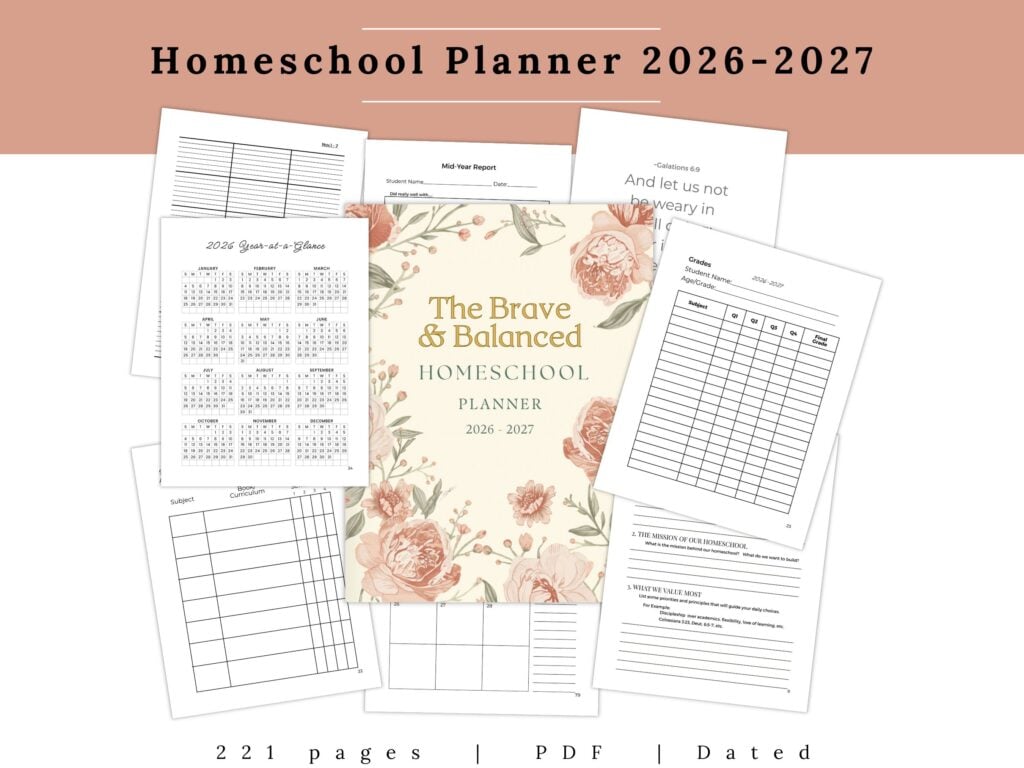
Get a one-page school year calendar and dream a little bit about what your homeschool schedule might look like for a whole year. (I just happen to have one for you in my free homeschool planner pages here.) Decide what days you will have school and what days you will have off from homeschool. This helps you see the overall picture of a school year. When will you have vacation time? This, by the way, can be any time during the year since you do not have to follow a public/private school schedule. Yay! Off season vacations can be amazing! What days will you be off because of holidays?
Think about the freedom your family has or could have as homeschoolers. Of course, if you are in a state with stricter requirements you may have less choices, but there is still more liberty in your child’s/children’s education than if they are in a school.
Go ahead and cross off days you will not do school. Make sure you count the days you will have school if your state requires you to keep attendance. You will want to make sure you meet the number of days they require your child to be in school. Remember, any days your children have educational fieldtrips or learning activities would count toward their school days. I always added an extra 5-10 days in our school calendar for any unexpected happenings. We could always knock them off the end of the year or take some extra time during the year if we wanted to.
Talk to Your Children
Let your children in on this dreaming and planning if possible and, if they are old enough, ask them if there is anything special they would like to learn about in the upcoming school year. Ask them which subjects they like best and which ones they wish they didn’t have to do. They still must do them, but you may be able to figure out a way to make them dislike them a little less. Talk to them about any upcoming field trips you may be thinking about or see if they have any ideas for field trips. You may even ask for their input on the calendar mentioned above. Let them see how you are thinking about planning out the year. Try to build a little bit of excitement about the possibilities in the upcoming school year and let them see what they have to look forward to.
Let me know if this has been a help to you or if you have any questions about homeschooling.
You can leave a comment or email me at Mary@whatabouthomeschooling.com
I am not affiliated with any organization or company mentioned in this post at the time of its publication.